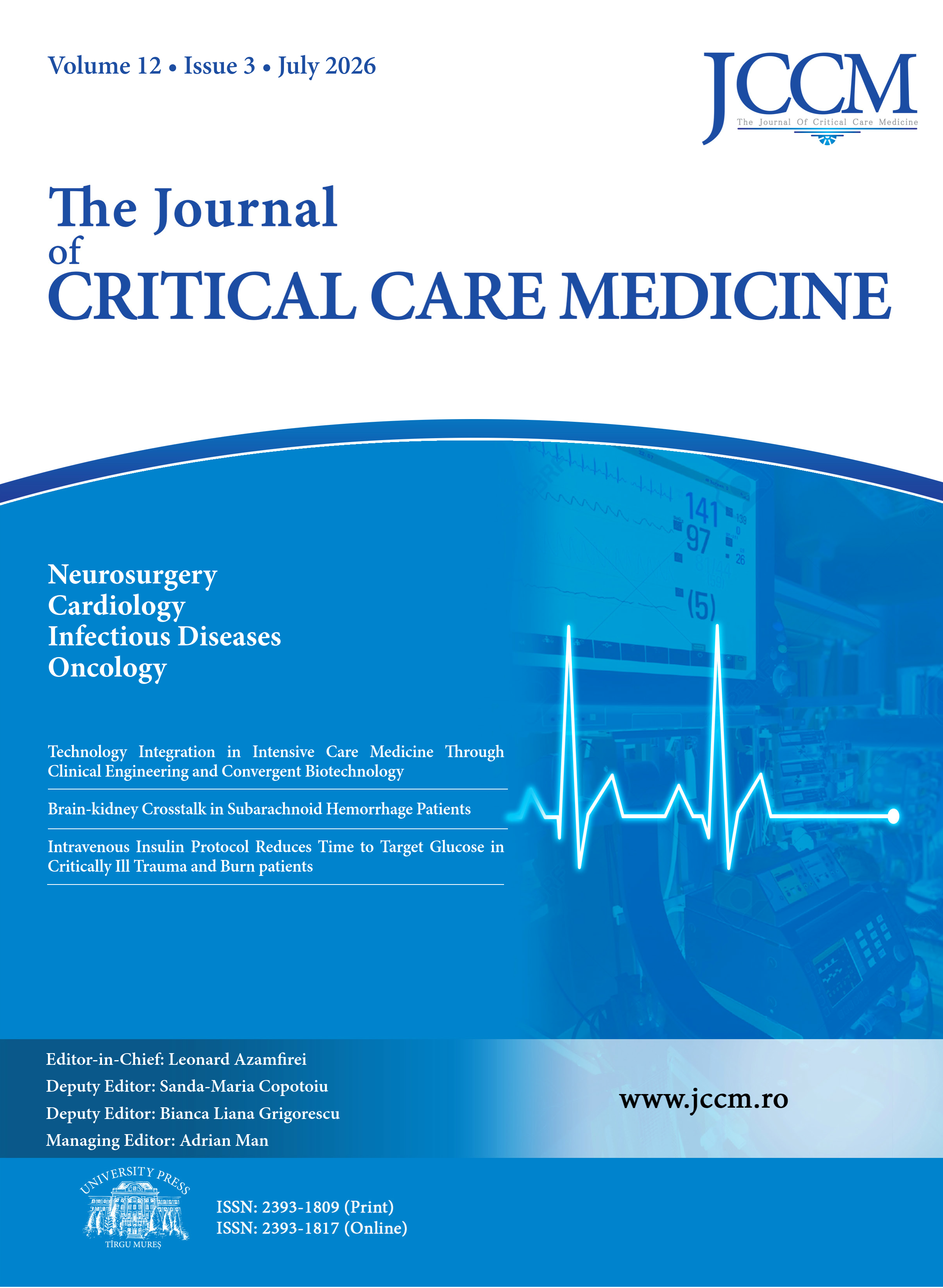
Intravenous insulin protocol reduces time to target glucose in critically ill trauma and burn patients
DOI:
https://doi.org/10.62838/jccm-2026-0027Keywords:
Hyperglycemia,, Hypoglycemia, Glucose variability, Stress induced hyperglycemia, Intravenous insulin, Subcutaneous insulin, Intravenous Insulin Protocol, Blood Glucose Titration, Tight Glycemic Control, Intensive Insulin TherapyAbstract
INTRODUCTION
Glycemic control is vital in the management of critically ill patients. Scientific evidence has proven that a drastic change in blood glucose levels can lead to adverse outcomes including increased hospital, ICU length of stay, morbidity, and mortality. Despite the challenges in developing standardized intravenous insulin protocols, institutions have successfully implemented protocols in various settings.
Our tertiary care hospital has an established intravenous insulin protocol for the cardiac ICU. Given the complexity of managing critically ill patients, an intravenous insulin protocol for such patients was implemented in February 2022.
AIM OF THE STUDY
The study aimed to evaluate the effectiveness of the newly implemented intravenous insulin protocol in glycemic control of critically ill trauma and burn patients.
MATERIAL AND METHODS
A single center retrospective chart review was conducted on 230 patients:119 patients were extracted from the pre-protocol implementation and 111 patients post-protocol implementation periods. Ninety-nine patients were excluded due to on-admission diagnosis of diabetic ketoacidosis, hyperosmolar hyperglycemic state, or incomplete data. Data collection included: type of injury; body mass index, pre-existing comorbidities; insulin administration times; target glucose actualization; glycemic events; hospital and ICU length of stay, mortality rates in the ICU, hospital, and 30 days post-hospitalization.
RESULTS
In the post-implementation group, the time to reach target glucose was significantly reduced when compared to the pre-implementation group. The rates of glycemic events after achieving target glucose were similar with a slightly lower rate post-implementation. There were no differences in the length of stay or mortality rates during hospitalization or 30-days post-hospitalization between the groups. However, when comparing routes of insulin administrations, the intravenous insulin significantly showed better glucose control and reduced the rates of glycemic events than the subcutaneous route.
CONCLUSION
Intravenous insulin protocol demonstrated a significant reduction in the time to target glucose levels for the critically ill patients.
Downloads
References
Downloads
Published
Issue
Section
Categories
License
Copyright (c) 2026 Oluwafolaranmi E. Sodade MD., Connor J. English DO., Cindy L. Austin MS. CCRP, Charles A. Lunday Pharm.D, Yang Wang PhD., Brian B. Draper DO, FACOS, FACS (Author)

This work is licensed under a Creative Commons Attribution 4.0 International License.
This journal provides immediate open access to its content under the Creative Commons BY 4.0 license. Authors who publish with this journal retain all copyrights and agree to the terms of CC BY 4.0 license. The journal allows free unlimited access to all its contents without any restrictions upon publication to all users. The published materials are free to be shared and adapted, giving appropriate credit and indicating if changes were made.